English (US)
 Español
 Deutsch
 Français
 Português
 Türk
 中国的
 ภาษาไทย
 Malay
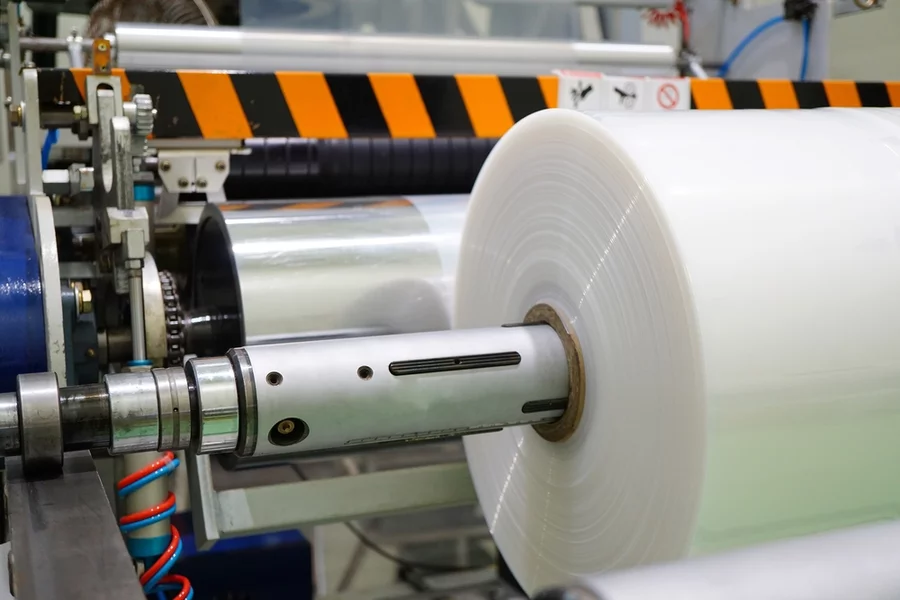
TL;DR: Cast and blown extrusion describe how plastic film is manufactured. Stretch film is one application, not another name for all cast or blown film. For manufacturers, process control, equipment cleanliness, and suitable purging procedures support consistent production and cleaner changeovers.
- Cast extrusion forms film through a flat die and cools it on a chill roll.
- Blown extrusion forms a tube through an annular die and expands it into a bubble.
- Blown film serves packaging, bag, liner, agricultural, and other applications; blown stretch film is one subset.
- Proper temperatures, cooling, equipment maintenance, and purging help reduce contamination and improve film quality.
- Select materials, film structures, and operating conditions for the required specification rather than assuming one process always performs better.
Cast and blown extrusion are two methods used to manufacture plastic film. They describe how the film is formed, rather than what the finished film is used for.
In cast extrusion, molten polymer passes through a flat die and onto a cooled roll. In blown extrusion, it passes through an annular die and expands into a bubble. These processes support a range of packaging and industrial applications. Stretch film is one example: manufacturers produce both cast stretch film and blown stretch film for securing products and palletized loads.
For film manufacturers, understanding these differences provides a starting point for managing production conditions, investigating defects, and planning cleaner changeovers.
What Are Cast and Blown Film Extrusion?
Cast Film Extrusion
Cast film is manufactured using a cast extrusion process. Plastic resin is melted and pushed through a flat die, creating a thin sheet of molten material. The film then contacts a cooled chill roll that solidifies it before downstream handling and winding.
Chill-roll temperature, melt flow, and downstream handling are important to thickness and appearance. Actual film properties depend on the resin, film structure, equipment, and operating conditions.
Blown Film Extrusion
Blown film is produced through a blown extrusion process that forms a tube rather than a flat sheet at the die.
The extrusion equipment pushes molten resin through an annular die. Air introduced into the center expands the tube into a bubble. On a conventional upward, air-cooled line, the bubble rises as the plastic cools before being collapsed and wound as tubing or slit into flat film.
Film width and thickness are controlled through the interaction of bubble expansion, extrusion output, and haul-off speed. Stable film formation and appropriate cooling are central to a consistent process.
What Products Are Made Using These Processes?
Blown-film applications include bags, industrial liners, food-packaging films, agricultural films, shrink film, and stretch film. Depending on the equipment and product, manufacturers can produce single-layer or multilayer films.
Cast extrusion also serves applications other than stretch wrap, including protective packaging and films used in laminated structures. The finished application determines the relevant optical, mechanical, sealing, and barrier requirements.
The distinction is important: blown film is a manufacturing category, while stretch film describes a product function. Blown stretch film is stretch film made by blown extrusion; cast stretch film is made by cast extrusion. Neither term describes every film made by that process.
Neither process is automatically better. Evaluate output and finished-film performance against the actual specification, resin formulation, thickness, layer structure, and equipment rather than making a universal comparison based on the process name.
Where Stretch Film Fits: Cast Stretch Film and Blown Stretch Film
Manufacturers produce both cast and blown stretch films for securing products and palletized loads. The terms identify the extrusion process used to make the stretch film, not two different end uses.
Puncture and tear resistance matter when loads contain sharp corners, irregular shapes, or protruding objects. Blown stretch films are available for demanding loads, but high-performance cast stretch films can also provide strong load containment. Compare the specified film products rather than assuming blown always means stronger.
Clarity and unwind behavior are relevant within this application. Many cast stretch films offer high clarity and quiet release. For barcode visibility or operator comfort, evaluate the specific film; these characteristics should not be generalized to every cast or blown film.
Some stretch films are supplied pre-stretched before application. These products can reduce the force required during hand wrapping, but their suitability still depends on the load and wrapping method.
Choosing the appropriate stretch film requires balancing stretch, holding force, thickness, puncture resistance, and load characteristics. For manufacturers, the practical task is to meet those requirements consistently through formulation, film design, and process control, whether the line uses cast or blown extrusion.
Processing Considerations for Cast and Blown Film
Cast Film Processing
Producing consistent cast film requires careful control throughout the extrusion line.
Temperature settings should allow the resin to melt and flow evenly through the die. Inconsistent temperatures can create variations in film thickness, clarity, and overall quality. Use the resin supplier’s guidance and the equipment manufacturer’s operating limits when establishing settings.
Cooling roll performance is equally important. Since rapid cooling is a defining feature of cast extrusion, manufacturers should monitor roll temperatures and operating conditions carefully. Include film contact, roll condition, and downstream handling in troubleshooting rather than assuming every defect originates in the extruder.
Clean processing equipment also matters. Residual resin, carbon buildup, or material left from previous production runs can introduce gels, black specks, and other defects into otherwise clear film.
Regular equipment maintenance and proper purging during material changes can help manufacturers maintain consistent film quality. Use a procedure suited to the materials and equipment, and confirm that the film meets the next product specification before releasing production.
Blown Film Processing
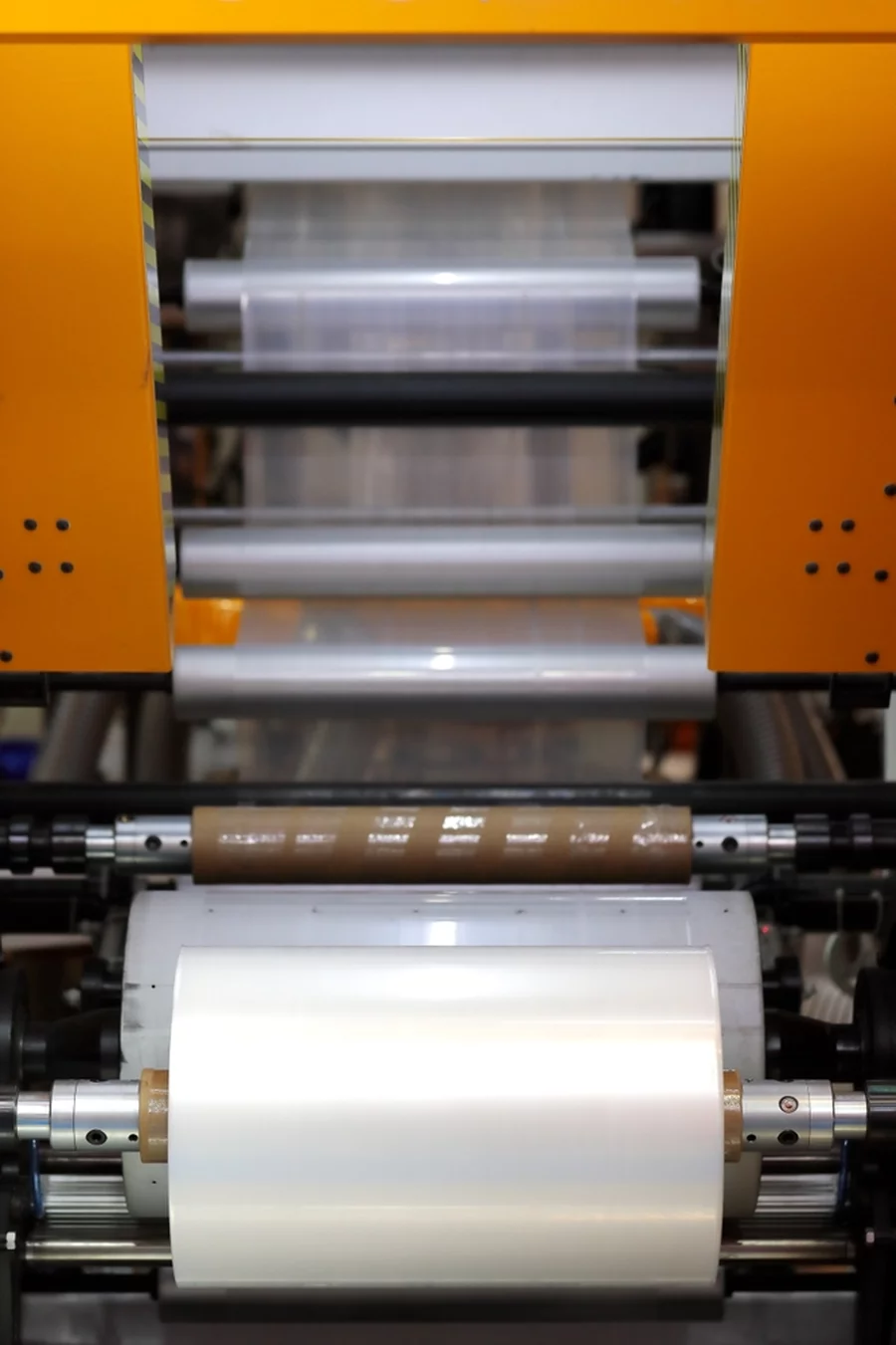
The blown extrusion process introduces additional variables because manufacturers must create and maintain a stable bubble.
Temperature, airflow, extrusion output, haul-off speed, and cooling conditions all influence the finished product. Small changes can affect film gauge, bubble stability, strength, and appearance. Monitor the bubble and downstream web together when investigating variation.
Die cleanliness is particularly important. Contamination inside the extruder or die can create streaks, gels, and other imperfections that continue through the bubble and into the finished roll.
Manufacturers should also monitor resin residence time. Material that remains inside hot equipment for too long may degrade and form deposits. Those deposits can eventually break free and contaminate the blown film.
Preventive purging can help remove residual material before buildup becomes a larger production problem. It does not correct every cause of film defects: temperature-control faults, inconsistent airflow, equipment misalignment, and web-handling problems require their own corrective action.
Contamination and Changeover Management
Film extrusion operations frequently transition between different resins, additives, colors, or product specifications. Residual material from the previous run can contaminate the next product, so changeover planning should address the materials and equipment involved.
Simply running production resin through the equipment may require significant material before the previous resin or color disappears completely. That means manufacturers can lose valuable production time while generating unusable film.
A suitable purging process can help remove residual material more efficiently. Keeping the screw, barrel, die, and other relevant flow paths clean also helps reduce contamination during subsequent production runs. Follow the selected grade’s instructions and confirm whether the proposed procedure is appropriate for the die and any installed filtration.
To evaluate a changeover, record the time to acceptable film, purge and production-resin consumption, and scrap generated. Compare similar transitions and inspect the film against the next product specification so any improvement is demonstrated on the line rather than assumed.
For high-volume film extrusion operations, even modest improvements in changeover efficiency can help reduce scrap and return equipment to productive operation sooner.
Selecting a Purging Approach for Your Film Line
Select an extrusion purging procedure for the actual line, not just the label “cast” or “blown.” Review the production resins, operating temperature range, equipment configuration, and contamination or changeover problem with the purging-compound supplier.
Confirm the appropriate purging grade and its use restrictions before introducing it into the system. Do not assume one compound or procedure is suitable for every material, screen pack, or die configuration.
For multilayer production, discuss the individual extruders and materials with technical support so the cleaning plan addresses the relevant melt paths. Follow the approved operating and safety instructions rather than applying a generic set of temperatures or screw speeds.
Clean equipment, appropriate temperatures, effective cooling, and proper changeover procedures all contribute to consistent film quality. Purging should complement process control and preventive maintenance, not replace them.
For application-specific guidance, review Purgex’s purging compounds for blown film information and discuss your line requirements with the technical support team.
Experiencing contamination or difficult changeovers on your film extrusion line? Contact Purgex to discuss a purging compound and procedure suited to your materials and equipment.